How I build
The agent thinks, the system enforces.
How I build production software with domain experts and AI agents as the engineering team, and why the guards matter more than the model.
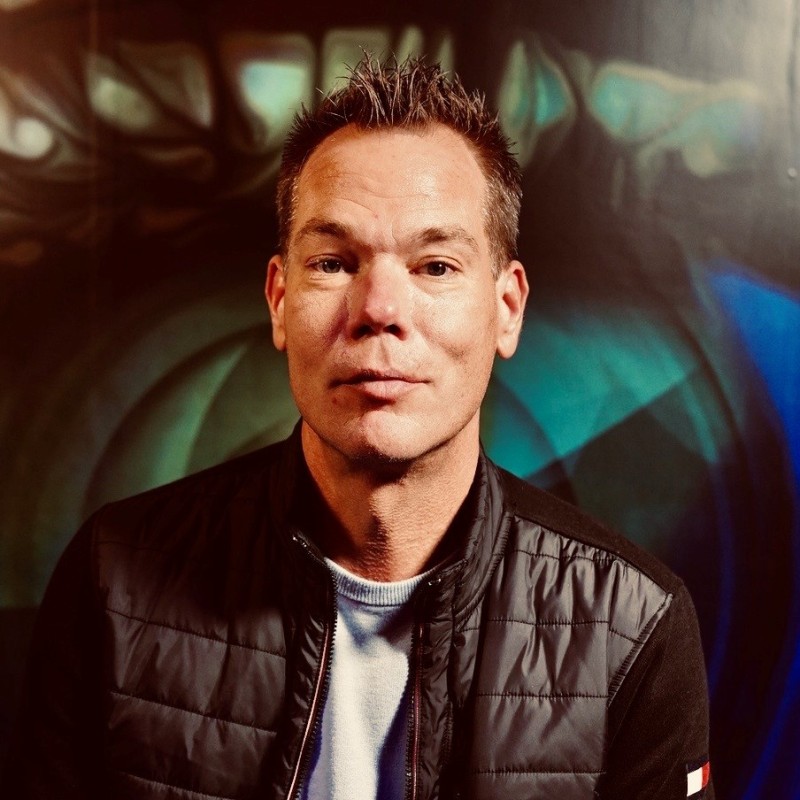
I am not a programmer. I trained as a journalist and spent 25 years building media businesses: Zoom.nl, two e-learning companies, magazines. Since 2025 I have been building production software with AI agents. SkyStatus, a Flying Blue analytics platform, was the first. The 2026 rebuild of Zoom.nl, live since 22 September 2026, was the second. At Reshift Digital, we are now bringing the same way of building to every brand. I do this as a managing director, not just because I enjoy it. The rules of search, content and media are being rewritten, and I want my view of them to come from experience.
What I learned is not about prompts. An agent is a strong engineer that forgets, guesses and agrees too easily. It writes good code most of the time. The question is what happens the rest of the time. My answer is one sentence: the agent thinks, the system enforces.
1. A rule in a document is a wish
Every team has rules. Most of them live in a document. A document is read once and then forgotten, by people and by agents. A rule that matters has to be built into the work itself, so it runs every single time.
So the rules are code. A hook refuses any commit that contains a password or key. A push to production that includes someone else's commit is blocked. A destructive database statement does not run. A test suite runs on every pull request, and a deploy only counts as live once the site itself reports the commit it serves.
Two properties make this work. Every guard fails closed: when it cannot tell, it blocks and says why. And the agent never works around a guard. When one stops it, the agent stops and explains why. Where an override exists, it is explicit and it is a person's call, never the agent's. If the guard is wrong, we change the guard in the open, with a test. We do not find a clever way past it.
2. Two labs, and every finding is a hypothesis
Claude Code and OpenAI Codex come from different labs. In most of my projects Claude Code builds and Codex reviews, as an independent second lab. In SkyStatus they are peers: both build, with equal authority. Models from different labs make different mistakes, so their blind spots overlap less than those of a single model.
A review is not a verdict. In one review round in July 2026, Codex cited the right file and line eight times out of eight. Two of its three proposed fixes would have introduced a new bug. Since then we check every finding against the actual code, and we check the proposed fix separately.
A reviewer also needs a stopping rule. Recently a review loop on a single safety hook ran six rounds and produced 26 findings, all of them real. By the last rounds it was finding ever more exotic shell syntax. That is the moment to stop and write down where the hook's job ends: it reads shell text, and the real check happens elsewhere, in the repository itself.
3. Red first, and count with tools
A test that never failed proves nothing. A new guard only counts once you have seen it block the thing it is meant to block. So every fix starts with a test that is red, then the change, then green.
The same goes for lists. Ask a model where something happens in a codebase and it reasons about where it should happen. In SkyStatus, three separate model passes planned a change to how experience points add up. All three missed the same five display components. A plain grep found them in ten seconds. Enumeration is a job for tools, not for reasoning.
4. Measure before you reason
Models are fluent, and fluency sounds like evidence. It is not. A finding based on two cases is a hypothesis, however neat the explanation.
An example from Flying Blue: a fare bonus counted towards status for one member and not for another. The tempting story was a clean rule that explained both. The honest answer was: we see a difference, and we do not know why. It could be a structural rule, a silent change by the airline or a setting per member. So the code keeps the safe default, the question stays open, and we write down what evidence would settle it.
Observation first, cause second, and the cause labelled as a guess until it is proven.
5. Simplify on evidence
Autonomy is addictive. SkyStatus grew to 96 scheduled jobs, with layers that recovered from failures, kept an eye on the other jobs and reported on themselves. Each layer made sense on the day it was added.
After a complexity audit on 26 October 2026 I switched 35 of them off. The clearest signal was the alert channel: about 45 messages a day, and nobody read them. Now it only raises an alert when a person is really needed: the site is down, a backup failed, a critical job died.
Every autonomous job is code to maintain, output to read and a failure mode of its own. Keep what catches real failures. Switch off what only produces activity.
6. Inside a media company
At Reshift Digital this is not a side project. The new Zoom.nl was built this way, and we work on ID.nl the same way. A few rules carry most of the weight:
- The same safety nets for everyone. Builders with write access and the owner work under the same hooks and the same checks. Only steps reserved for the owner, like a release to production, have a gate tied to that role.
- Docs move with code. A change that alters behaviour also updates the documentation that describes it, in the same commit. Outdated documentation is worse than none.
- Live means proven live. A merge starts a deploy. It only counts as live once the production site is running that exact commit.
- Nothing is remembered without review. Models are not allowed to rewrite their own notes. A lesson worth keeping becomes a proposal that is accepted or rejected, never written straight in.
7. What it does not solve
Without a tight feedback loop, agents still produce shallow visual design, so a person with eyes on the result stays close to the design work. Agents lose the thread in long sessions, so we cut the work into pieces with clear handovers. And a second lab adds noise as well as insight, which is why every finding stays a hypothesis.
None of this is about the model of the month. It is about the system around it. The agent thinks. The system enforces.